Every line an OrientDig bill can carry, plus the dollar rate it uses
An OrientDig order is paid in pieces. The first checkout is small and precise; later lines arrive only if something changes. Knowing which lines exist makes a surprise top-up easier to read.
The lines on a first checkout
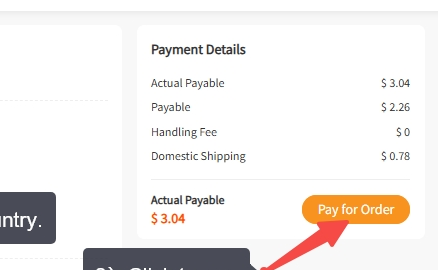
The operator's 2025 tutorial includes a screenshot of the first checkout. Its Payment Details box lists four lines:
- Payable $2.26: the goods.
- Domestic Shipping $0.78: the seller's delivery to the warehouse.
- Handling Fee $0.
- Actual Payable $3.04.
The zero handling fee matches the fee page: "There are no handling fees for orders from common shopping platforms." Optional services cost extra and are chosen later.
These are the operator's example figures, not a quote. What is useful is the structure: the only two lines that can move after you pay are the first two, and the help center says the second moves more often.
Lines that can appear later in the order
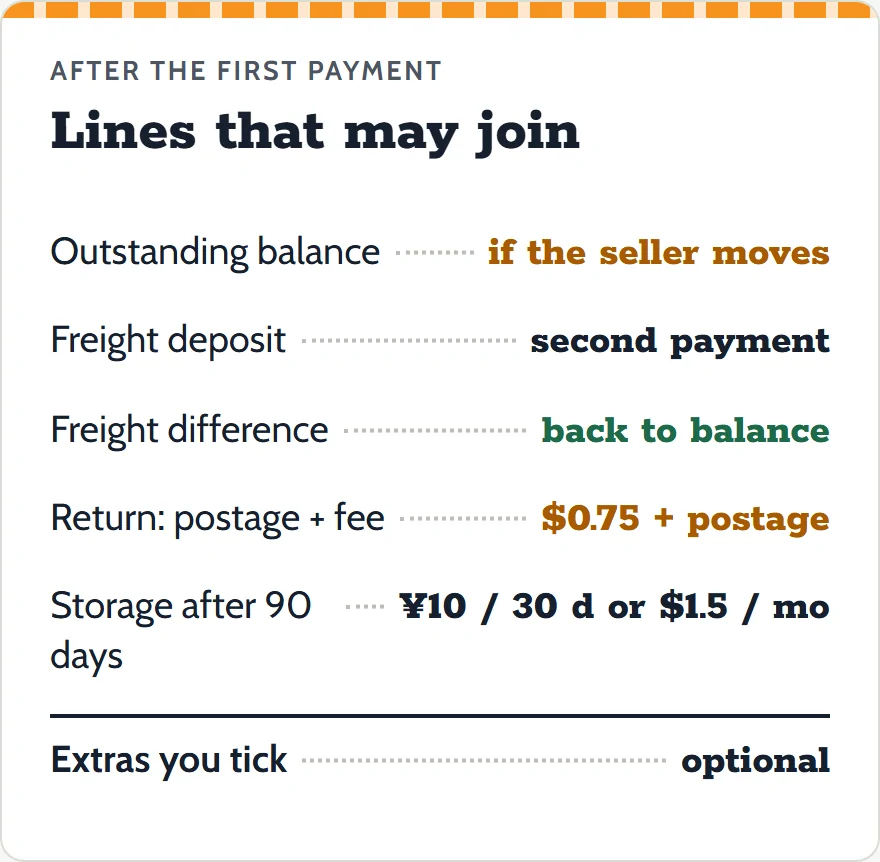
After the first payment, any of these can join the bill. Each links to the page that explains it.
- Outstanding balance: the seller changed the price or delivery fee (price changes).
- Freight deposit: the second payment, set from an estimate (freight balance).
- Freight difference: refunded to your account if the deposit was too high.
- Return fees: if you send an item back within 120 hours of storage, the postage in each direction and a 0.75 USD service charge.
- Storage extension: items are stored free for 90 days. The storage article prices an extension at 10 CNY for 30 days, while the value-added table lists 1.5 USD per product per month; both pages are current, so check the one your account shows.
- Extras: photos, rehearsal packing and packing materials, only if you order them.
OrientDig's display rate, read November 10
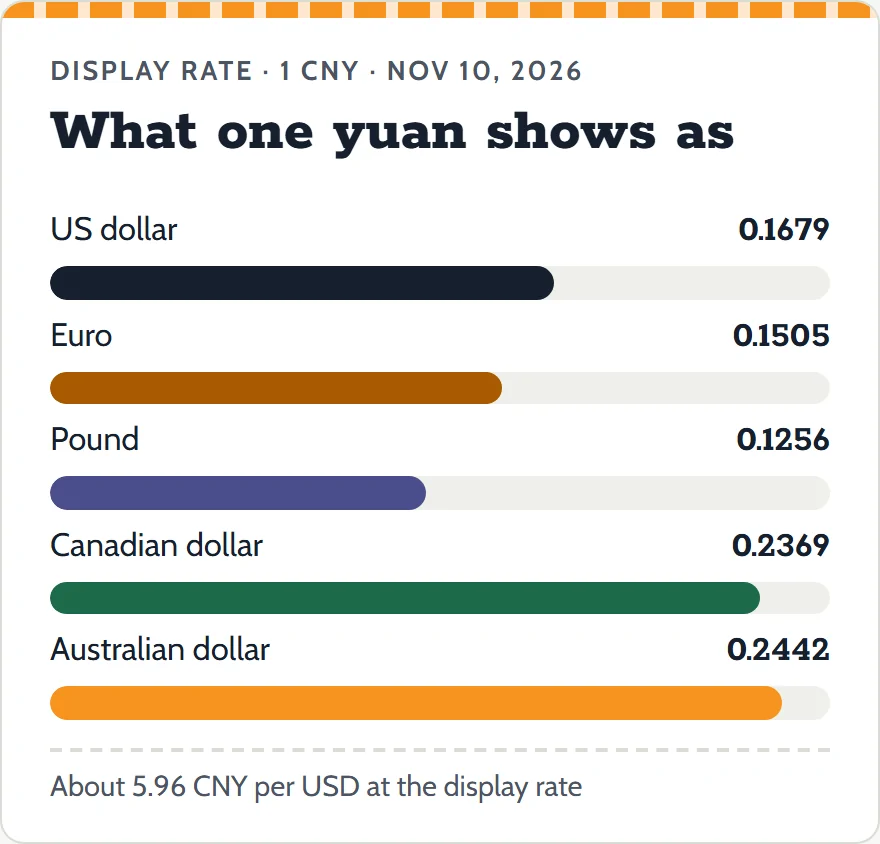
OrientDig keeps prices in yuan and shows a converted figure in the currency you pick: CNY, USD, EUR, GBP, AUD, CAD, PLN, NZD or CHF. On November 10, 2026 its display rate for one yuan was 0.167888 USD, which works out to about 5.96 yuan per dollar. The same day it showed 0.1504608 EUR and 0.1256304 GBP per yuan. The figures had not changed since we first read them on November 9.
A display rate is OrientDig's own exchange rate, not a market rate. An outside comparison table dated October 2, 2026 measured OrientDig's exchange-rate markup at about 12.2% over the mid-market rate. That is one table on one day, not a published fee, but it explains why a converted price can look higher than your bank app suggests.
For card and wallet payments OrientDig does not publish a fee table. Its payment page says channels "may occasionally be suspended" and the options at checkout govern, so the amount on the checkout page is the one to compare.
The first total is a starting figure
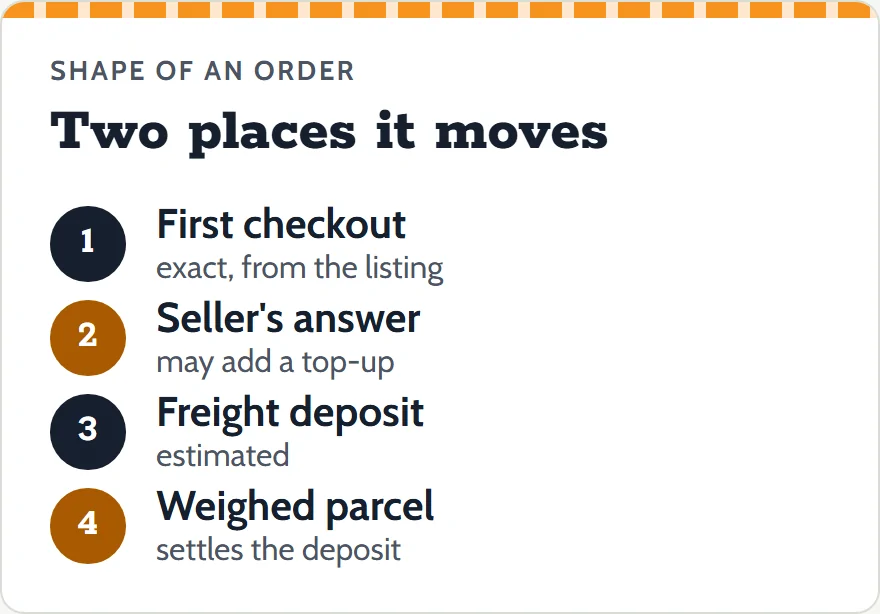
Put the pieces together and the shape of an order is clear. The first checkout is an exact figure for goods and Chinese delivery, built from the listing. It can grow once (the seller's answer) and the freight deposit can be trued up once (the weighed parcel). Everything else is optional.
That gives a simple way to judge a find from the catalog: ask how likely each of those two adjustments is. A light item from a seller you have already bought from, in a one-seller checkout, has little room to move. A bulky item from a shop with a suspiciously low delivery fee has plenty. The Price-hold sheet exists for the second kind.