The OrientDig Spreadsheet catalog, annotated for price risk
The OrientDig Spreadsheet is a product catalog: finds from Taobao, Weidian and 1688 grouped into shelves, each card with a photo, a title and the listing price in yuan. You browse it, pick a find, and then buy it through OrientDig.
This site's angle is what happens to that listing price afterwards, so every shelf below carries a short note on the thing most likely to change the bill for that kind of item.
Price-risk notes, one per catalog shelf
Each card opens one shelf. The note under the name is the thing most likely to change the bill for that kind of find; the longer notes are further down this page.
 BeltsLength is picked at checkout; a wrong one later means a return.Category
 Sunglasses and framesHard cases add box size to the parcel.Category
 TeesLight, and often several from one shop: one delivery fee.Category
 SneakersShoe boxes can bill by size, not weight.Category
 Hoodies and zipsSize swaps are free only until the seller ships.Category
 JeansStore stock counts may lag behind real sizes.Category
 Coats and puffersWeighs little, packs large.Category
 Sweatpants and joggersA sold-out color brings a 72-hour notice.Category
 BagsStuffing and dust bags add grams and centimeters.Category
 Hats and beaniesEasy to add to a same-shop checkout.Category
 Rings and jewelrySo light the delivery fee can lead the line.Category
 WatchesThe warehouse checks appearance only.Category
 Women's picksA keyword search across several shelves.Search results
 Football shirtsName prints are custom work: no no-reason return.Category
 FragranceLiquids are restricted on many shipping lines.Category
 Speakers and gadgetsInspected by look; nobody powers them on.Category
Finds on display, no counter attached
Here is what the OrientDig Spreadsheet covers, and where its usefulness ends. Picture a window display with nobody at the counter. Each card in the catalog points at a listing a seller runs on a Chinese marketplace. Nothing is sold here or held for you, and each card shows the listing's price as it stood on the day the card was made.
That last point is the reason this guide exists. Between the card and your parcel, the price passes through four hands: the listing, your first payment at OrientDig, the purchaser's conversation with the seller, and the warehouse scale. The catalog can only show you the first of those.
It is also not a list of guaranteed bargains. A card tells you a find exists and roughly what it cost on the day it was captured. Whether it is still a deal is settled by the seller's answer, and that is covered on the price changes and stock pages.
Notes worth copying off a card
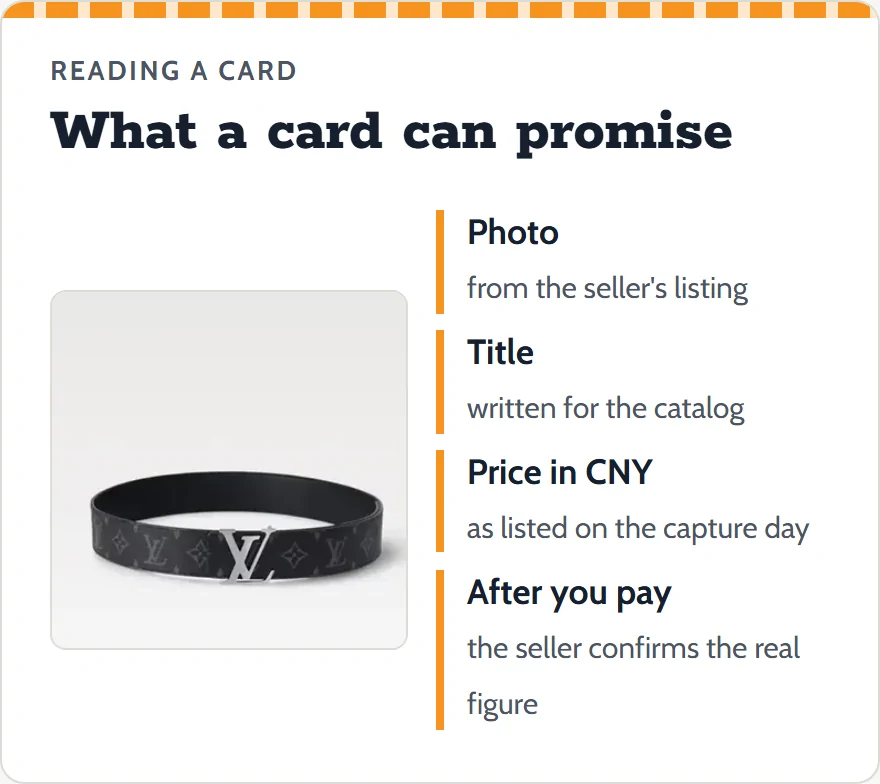
Before a find leaves the catalog, note three things, because you will want them when the purchaser reports back:
- The listing price and the option you want. Size, color and length are chosen on the product page at OrientDig; a different option can carry a different price.
- The seller. Two cards from one shop belong in a single checkout, which lets OrientDig charge the Chinese delivery fee once.
- The bulk. A pair of sneakers in a box or a puffer jacket takes space. Freight on some lines follows box size, not the scale.
Put those notes straight into the Price-hold sheet as the "you paid" side once you check out. When the reported figures arrive, the comparison takes a second.
Shelf notes: what tends to move after checkout
These notes come from OrientDig's own rules applied to each kind of item, not from price history.
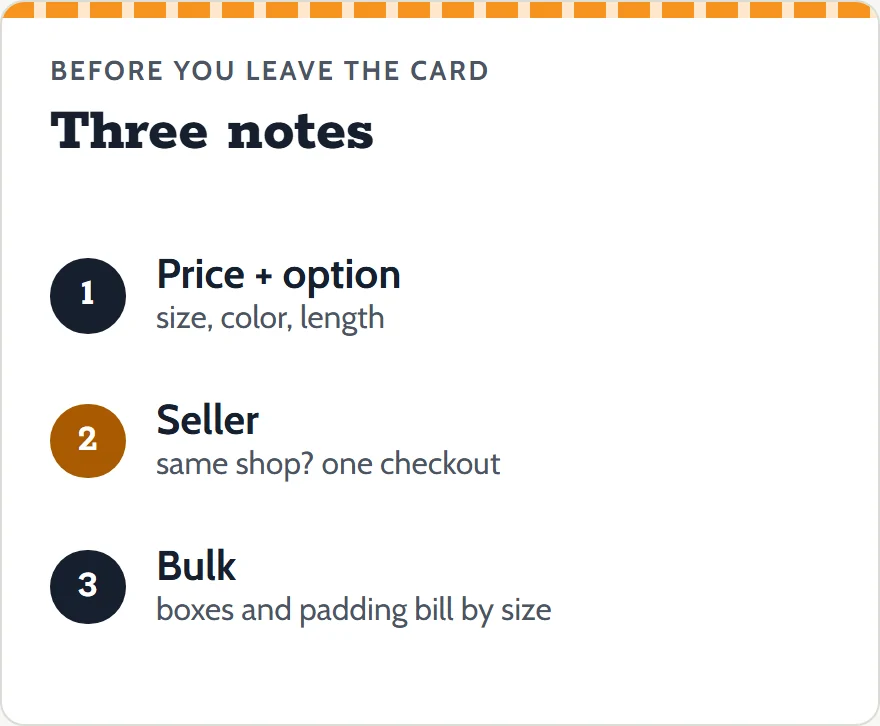
- Belts
- Length is an option you pick at checkout. A wrong length after the seller ships becomes a return and a new order.
- Sunglasses and frames
- Hard cases add volume. On lines that use a divisor, the box size can outweigh the glasses.
- Tees
- Light, and often several from one shop: the case the single-delivery-fee rule was written for.
- Sneakers
- Shoe boxes are the classic volumetric-weight item. Decide whether the box travels before you pay the deposit.
- Hoodies and zips
- Size changes are free to negotiate only until the seller ships.
- Jeans
- As with hoodies, plus a seller-side stock count that may lag behind real sizes.
- Coats and puffers
- They weigh little and pack large, so expect the box-size figure to lead.
- Sweatpants and joggers
- If a color sells out you get an out-of-stock notice; answer it inside 72 hours.
- Bags
- Stuffing and dust bags add grams and centimeters. Packaging removal changes the billed weight.
- Hats and beanies
- Easy to add to another order from the same shop before checkout.
- Rings and jewelry
- So light that the Chinese delivery fee can be a large share of the line.
- Watches
- The warehouse check is an appearance check, so timekeeping is not part of it.
- Women's picks
- A keyword search across shelves, so check each listing's options carefully.
- Football shirts
- A printed name or number is custom work, and customized products are excluded from no-reason returns.
- Fragrance
- Liquids are limited on many shipping lines; look at the line's restrictions before you pay the deposit.
- Speakers and gadgets
- Checked by appearance only; nobody powers them on. Batteries can restrict the line.
Card to cart: the handover to OrientDig
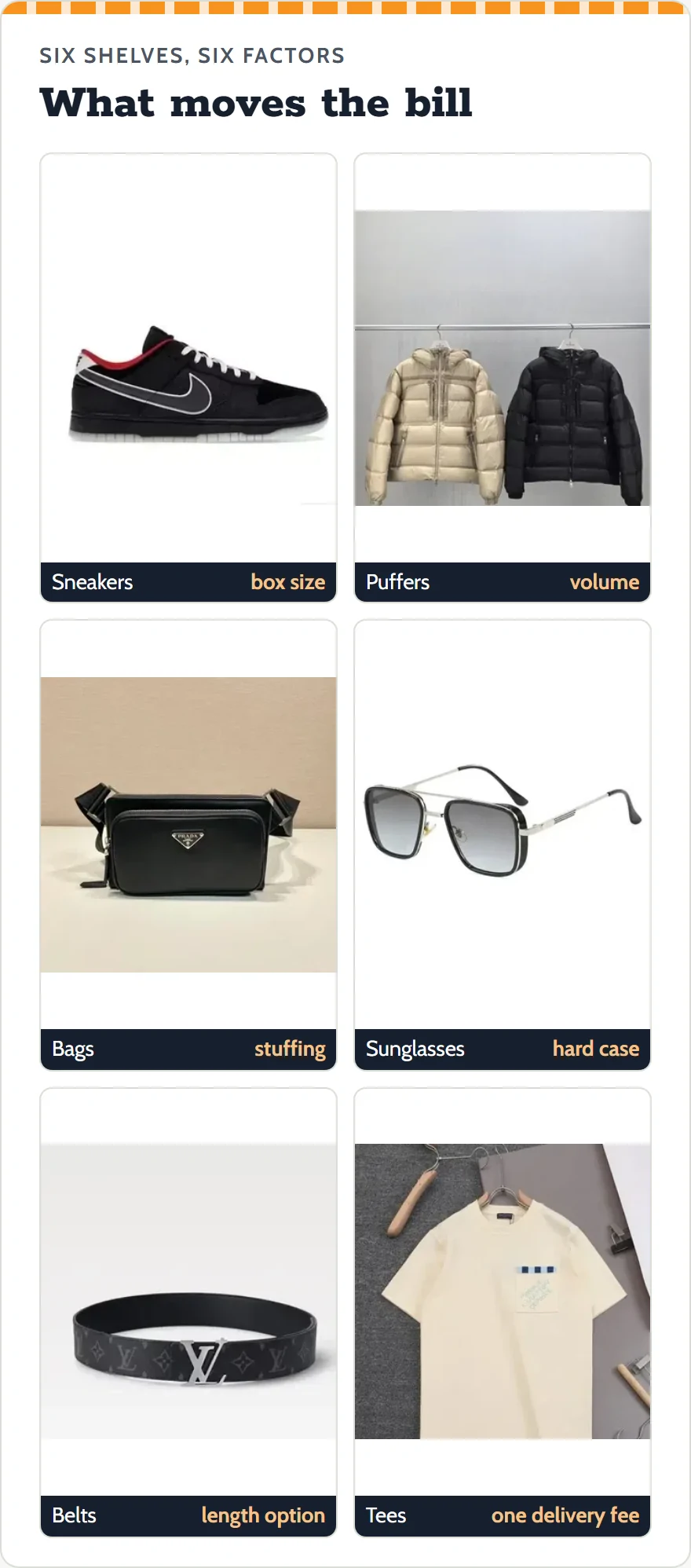
Once a find is chosen, the handover is short. Copy the find's listing link, put it in the long search field that opens OrientDig's home page, and press Submit; OrientDig's tutorial lists Taobao, Tmall, 1688 and Weidian as the platforms it reads by link. On the product page you get the yuan price beside a converted one, the options, and the domestic freight for the seller-to-warehouse leg.
Choose the option, add it to the cart, and repeat for every other find from that seller before paying. The cart is where the single-delivery-fee rule is won or lost.
If you have no account yet, OrientDig's sign-up page opens with our referral code attached. The code does not change your prices or the rules on this site.